

By Eli Jesse
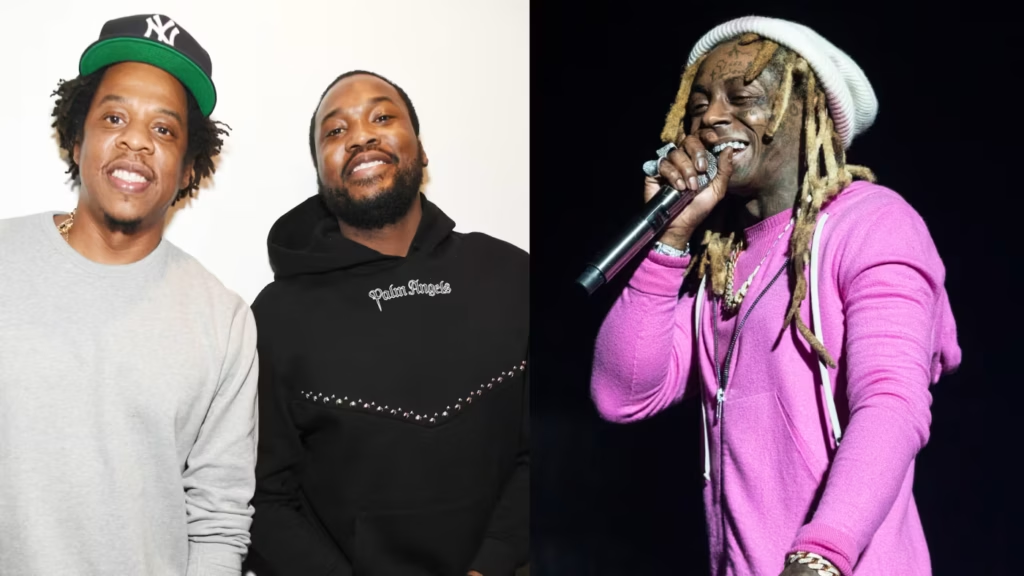
A growing movement to protect rap artists from having their lyrics used against them in criminal court cases is once again gaining national attention, with major East Coast figures such as Jay-Z and Meek Mill continuing to push for legal reforms.
The debate, which has been ongoing for years, has recently returned to the center of hip-hop conversations after renewed calls for lawmakers to strengthen protections surrounding artistic expression. Supporters argue that rap lyrics are too often treated as literal confessions rather than creative works, raising concerns about fairness, free speech, and equal treatment under the law.
The issue has become one of the most discussed topics across hip-hop media, legal circles, and social media platforms, where artists, fans, attorneys, and activists continue debating whether lyrics should be admissible as evidence in criminal trials.
For many within the hip-hop community, the conversation extends far beyond music. It touches on questions of race, artistic freedom, and the way rap culture is perceived within the American justice system.
Why the Debate Exists
At the center of the controversy is a simple but important question: should lyrics written by musicians be treated differently from other forms of artistic expression?
Prosecutors have occasionally introduced rap lyrics as evidence in criminal cases, arguing that certain lines may demonstrate motive, intent, or knowledge of alleged crimes. Defense attorneys and civil rights advocates, however, often argue that lyrics are artistic creations that frequently include exaggeration, fictional storytelling, symbolism, and entertainment-driven narratives.
Hip-hop artists have long pointed out that musicians in other genres regularly write about violence, crime, or controversial subjects without facing the same level of scrutiny.
Movies, television shows, novels, and songs across numerous genres often contain fictional depictions of criminal behavior. Critics of current practices argue that rap artists are disproportionately affected when courts attempt to interpret artistic content as factual admissions.
As a result, many legal experts have called for stricter standards before lyrics can be introduced as evidence during criminal proceedings.
Jay-Z’s Continued Advocacy
Among the most prominent voices supporting reform is Jay-Z.
Over the last several years, the Brooklyn rap icon has repeatedly spoken out about the issue through public statements, partnerships, and advocacy efforts. Through various initiatives, he has supported campaigns aimed at protecting artistic freedom while encouraging lawmakers to modernize how courts evaluate creative expression.
Jay-Z’s involvement has helped bring significant visibility to the discussion, particularly because of his influence both inside and outside the music industry.
Supporters believe his participation has helped transform what was once viewed as a niche legal concern into a broader national conversation about civil liberties and free speech.
For many artists, his advocacy reflects a belief that creative works should not automatically be interpreted as autobiographical statements.
Meek Mill’s Personal Perspective
Philadelphia rapper Meek Mill has also become one of the most vocal supporters of reform efforts.
Having experienced numerous legal battles throughout his career, Meek has frequently spoken about criminal justice issues and the challenges faced by many young artists.
His perspective resonates with fans because it comes from personal experience navigating the legal system while maintaining a public career.
Over the years, Meek has used interviews, social media posts, and public appearances to argue that lyrics should be understood within their artistic context rather than being treated as straightforward factual accounts.
His advocacy has helped bring younger audiences into the conversation and encouraged broader awareness of how artistic expression intersects with legal proceedings.
The Hip-Hop Community Responds
The renewed push has generated strong reactions throughout the hip-hop world.
Artists, producers, executives, and fans have largely expressed support for efforts aimed at strengthening protections for creative works. Many believe that using lyrics as evidence risks creating a chilling effect, where artists may feel pressured to limit their creativity out of concern that their music could later be scrutinized in court.
Others argue that artistic freedom is essential to hip-hop’s identity.
From its earliest days, rap has provided a platform for storytelling, social commentary, personal reflection, and creative imagination. Restricting that expression could fundamentally alter the genre’s role within culture.
At the same time, some legal observers maintain that lyrics may still have relevance in certain specific circumstances, particularly when combined with additional evidence. This ongoing disagreement ensures that the debate remains complex and highly contested.
Social Media Amplifies the Discussion
The rise of social media has significantly increased public awareness of the issue.
Whenever a high-profile case involves lyrics being introduced as evidence, discussions quickly spread across platforms such as X, Instagram, TikTok, and YouTube. Fans often share examples of fictional storytelling in music and compare rap’s treatment to other artistic mediums.
As a result, what might once have remained a legal discussion among attorneys now regularly becomes a cultural conversation involving millions of people.
The latest wave of advocacy has once again sparked viral debates, with many users calling for lawmakers to establish clearer standards that better protect artists’ rights.
Why This Matters Beyond Hip-Hop
Although rap remains at the center of the conversation, the implications extend beyond the music industry.
Legal scholars note that decisions involving artistic expression can influence how courts evaluate other forms of creative work, including films, books, visual art, and digital media.
The outcome of ongoing reform efforts could help shape future conversations about free speech and the boundaries between creative expression and legal evidence.
For supporters, protecting artistic freedom is not simply about defending rappers. It is about ensuring that creative works are evaluated fairly and within their intended context.
Looking Ahead
As lawmakers continue reviewing proposals and advocacy groups maintain pressure for reform, the debate over rap lyrics in court is unlikely to disappear anytime soon.
With influential voices such as Jay-Z and Meek Mill helping lead the conversation, the issue has reached a level of visibility rarely seen in previous years.
For many within hip-hop, the goal is clear: ensure that music is recognized as art first and foremost.
Whether new legislation ultimately changes courtroom practices remains to be seen, but one thing is certain—the fight over how rap lyrics are treated in the legal system has become one of the most important cultural discussions facing hip-hop today.
As the movement continues gaining momentum, artists and fans alike will be watching closely to see whether meaningful changes finally become reality.


