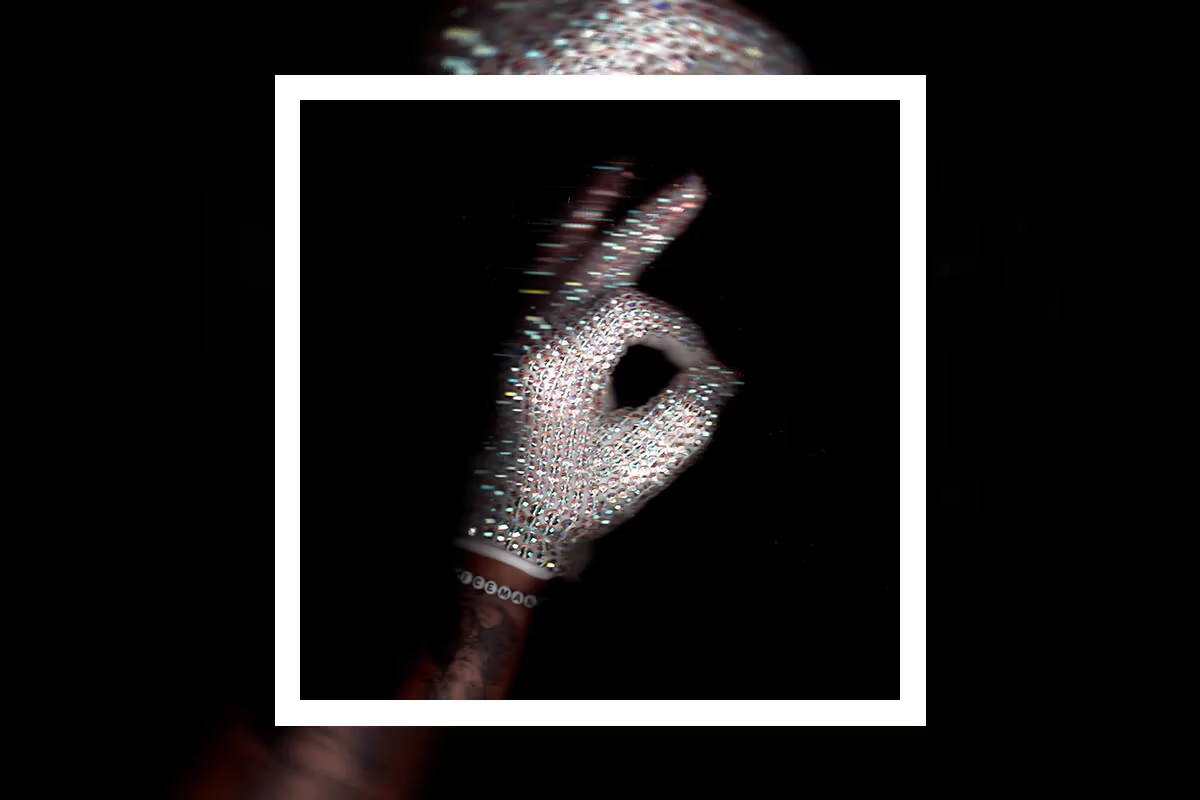


The legendary Staten Island collective Wu-Tang Clan has officially expanded their “Final Chamber” farewell tour, adding new performance dates as global demand for their final group appearances continues to rise. The announcement comes at a pivotal moment, as the group also receives renewed attention following their nomination for the 2026 Rock & Roll Hall of Fame.
For fans of hip-hop, this moment represents both celebration and closure an opportunity to witness one of the most influential groups in music history before they fully step back from touring together.

A Farewell Tour That Became Bigger Than Expected
Originally announced as a final global tour, Wu-Tang Clan’s “Final Chamber” was expected to mark the end of large-scale group performances. However, overwhelming demand from fans across North America, Europe, and beyond has led to the addition of multiple new dates.
The expansion reflects the group’s rare position in music history. Few hip-hop acts have maintained both critical respect and long-term cultural relevance across three decades while still commanding major live audiences.
Wu-Tang Clan’s influence stretches far beyond their catalog. Their approach to group identity, storytelling, production style, and branding reshaped how hip-hop collectives operate.
Songs from their early era continue to dominate playlists, while younger generations regularly discover their music through streaming platforms, documentaries, and cultural references in modern rap.
Staten Island’s Global Legacy

Formed in Staten Island in the early 1990s, Wu-Tang Clan emerged with a sound that permanently shifted hip-hop’s direction. Their debut album, Enter the Wu-Tang (36 Chambers), is widely regarded as one of the most important releases in rap history.
The group introduced a raw, cinematic style built on gritty beats, martial arts influences, and layered lyricism. This aesthetic helped define the sound of East Coast hip-hop during a period of intense creative competition between regional scenes.
Each member brought a distinct personality and voice, allowing the group to function as both a collective and a launchpad for successful solo careers. This structure became a blueprint for future hip-hop groups and label collectives.
Even decades later, Wu-Tang Clan’s influence can be heard in modern rap production, fashion branding, and independent artist movements.
“Final Chamber” Tour: More Than a Concert Series
The “Final Chamber” farewell tour is designed as a full retrospective of the group’s legacy. Rather than simply performing hits, the shows are structured to reflect different eras of Wu-Tang Clan’s evolution.
The performances blend live music with visual storytelling, archival footage, and thematic staging that reflects the group’s long journey from underground rap innovators to global icons.
Fans attending the tour can expect a mix of classic tracks, solo highlights, and group collaborations that rarely appear in live settings today.
The emotional weight of the tour is also part of its appeal. For many fans, this represents a final chance to see Wu-Tang Clan perform together in a major touring format.
Rock & Roll Hall of Fame Nomination Reignites Debate
Alongside the tour expansion, Wu-Tang Clan has been named among the nominees for the 2026 Rock & Roll Hall of Fame. The nomination has sparked renewed conversation about how hip-hop is recognized within traditionally rock-focused institutions.
While hip-hop has gained increasing representation in recent years, debates continue over which artists and groups deserve early induction status based on cultural impact.

For Wu-Tang Clan, the nomination is widely seen as overdue recognition. Their influence on global music culture is difficult to measure, extending beyond album sales into fashion, film, language, and entrepreneurship.
The nomination also reinforces their status as one of the most important American music groups of the modern era.
Cultural Impact That Extends Beyond Music
Wu-Tang Clan’s legacy is not limited to sound alone. Their branding strategy, including individual member identities and symbolic imagery, changed how artists approach ownership and creative independence.
They helped popularize the idea that a hip-hop group could function as both a collective and a network of individual brands. This model influenced countless artists and labels that followed.
Their cultural reach has also extended into film, television, and business ventures. Members have appeared in movies, launched solo enterprises, and contributed to the broader entertainment industry in ways that reflect hip-hop’s expansion into mainstream culture.
A New Generation Rediscovering Wu-Tang Clan
One of the key reasons behind the tour’s strong demand is the resurgence of interest from younger audiences.
Streaming platforms have made Wu-Tang Clan’s catalog more accessible than ever, allowing new listeners to explore their discography alongside modern artists. Social media platforms have also played a major role in reviving interest through clips, interviews, and cultural commentary.
Many younger fans view Wu-Tang Clan not only as pioneers but also as timeless storytellers whose music still resonates today.
This generational bridge has helped sustain the group’s relevance, even as they approach the end of their touring era.
The Emotional Weight of a Final Era
Farewell tours in music often carry emotional significance, but Wu-Tang Clan’s situation is particularly meaningful due to their cultural impact.
The group represents a foundational chapter in hip-hop history. Their early work helped define an entire generation of East Coast rap, while their later projects expanded their global influence.
For fans, the “Final Chamber” tour is more than nostalgia—it is a live archive of hip-hop history.
Each performance becomes a moment of reflection on how far the culture has come since the group’s beginnings in Staten Island.
What Comes After the Farewell Tour?
While the tour marks the end of large-scale group performances, it does not necessarily signal the end of Wu-Tang Clan’s individual creative output. Members have historically maintained solo careers, collaborations, and business ventures outside of the group.
However, the expansion of the farewell tour suggests a carefully curated closing chapter rather than a sudden exit.
Industry observers expect continued cultural presence through documentaries, re-releases, and potential legacy projects that preserve the group’s history for future generations.
Conclusion: A Legacy Still Expanding
The expansion of Wu-Tang Clan’s “Final Chamber” farewell tour, combined with their Rock & Roll Hall of Fame nomination, highlights a rare moment in music history where legacy and relevance intersect in real time.
Few groups in hip-hop—or music overall—have maintained such a powerful cultural footprint across decades while continuing to attract new audiences.
As the tour continues to grow, Wu-Tang Clan’s story is not just ending—it is being redefined one final time on stages around the world.